

Going Off The Grid? How To Safely Set Up Your Gas System
South Africa’s power grid has been a topic of concern for many years, with load shedding and power outages being a common occurrence. This has led many homeowners and businesses to consider going off the grid and finding alternative sources of energy. One such alternative is gas, and with the help of a registered gas practitioner, it is possible to safely remove your home or business from Eskom’s grid.
Using gas as an alternative source of energy has many benefits, including cost-effectiveness and reduced carbon emissions. It is important to note, however, that gas must be handled with care and that compliance with safety regulations is crucial. This is where a registered gas practitioner comes in.
A registered gas practitioner is a professional who is trained and qualified to work with gas systems. They can provide advice on the best gas systems for your home or business, install and maintain gas systems, and ensure that your gas system is compliant with safety regulations.
When using gas as a lifeline, it is important to ensure that your gas system is compliant with safety regulations. This includes regular maintenance and servicing of the system to ensure that it is functioning properly. It is also important to have an Electronic Certificate of Compliance (CoC). The paper book CoC is being phased out and will no longer be valid from April 1st 2023, and an updated CoC is required every time there is repair, maintenance, or servicing done on gas systems.
While gas is an excellent alternative source of energy, it is not the only option out there. Other renewable energy sources, such as solar and wind power, can also be used to go off the grid depending on your business or home needs. However, gas is often the primary focus due to its accessibility, established and well-regulated industry in South Africa plus its ease of use. Gas systems are often easier to implement immediately versus the high costs of solar power solutions that can take much longer to save up for.
In conclusion, going off the grid is a viable option for homeowners and businesses in South Africa who are tired of dealing with load shedding and power outages. By using a registered gas practitioner, it is possible to safely remove your home or business from Eskom’s grid and use gas as an alternative source of energy. Compliance with safety regulations is crucial, and a CoC is required. Visit the SAQCC Gas website to find a local registered gas practitioner. The South African Qualification and Certification Committee for Gas (SAQCC Gas) is an integral part of the system that ensures safe gas installation and use in South Africa. It provides training and certification for gas practitioners and oversees compliance with safety regulations.
Q3: Gas is the winner in efficiency and accessibility
For many South Africans, gas is an implementable energy source in their businesses which combats surging energy bills.
A local start-up in the gas industry has recently made it possible for over 25 000 South Africans to purchase gas at any desired quantity. This is just one of the many ways gas consumers can easily access this reliable energy source.
Gas has several applications in both domestic and commercial settings and it takes about three times as much energy to produce and deliver electricity to a stove! It is the clear winner in the energy efficiency battle between gas and electric when cooking. This is very real when considering the recent rejection of the national electricity utility’s request to hike tariffs by 38.1% for 2022-2023.
Gas’s superior efficiency and accessibility is obvious. So how can you start fully utilising gas in your business? Safety is key. That’s why the South African Qualification and Certification Committee (SAQCC) works tirelessly to keep growing higher levels of competency and compliancy in the gas industry.
As a non-profit company, it was formed to establish a central database for registered and authorised gas practitioners to work with gas and on gas systems. SAQCC Gas believes South Africa needs more awareness on gas-work competency and safety. By registering, gas practitioners ensure business safety and that every employee gets home safe too.
SAQCC Gas provides gas practitioners with the latest regulations, training and the competency they need to remain safe on the job and support the safety of our communities. Any consumers utilising a gas system in domestic, commercial, industrial or specialised capacities must be sure to only make use of registered gas practitioners.
Responsible owners should have legitimate Certificates of Conformity (CoCs) for their gas systems as well as regularly have inspections to avoid being caught off guard when selling or if there is a costly fault due to poor maintenance.
Consumers can ensure a CoC’s authenticity by verifying that the gas installation matches the association, e.g., LPGSA for LP gas installations or SARACCA for refrigerant gasses. Registered gas practitioners can now also efficiently and seamlessly provide electronic CoCs by using the SAQCC Gas mobile app.
Whether you are a consumer or gas practitioner, you can do your part to increase awareness of safe gas use and installation. The four member associations who form SAQCC make it simple for the consumers and practitioners to report incidents or installations that do not meet current regulations.
Registered gas practitioners always have the experience, competency, equipment and knowledge to do the work safely the first time. Be cautious of the fastest and cheapest quote! Your own and others’ wellbeing is worth more than saving a few extra Rands. If you suffer losses due to non-compliant gas work, insurance companies may not cover fire or public liability claims caused by non-registered persons.
A Safer Year So Far in SA’s Gas Industry
Comparing registration numbers between March 2021 to March 2022, there has been an increase in registered gas practitioners according to the South African Qualification and Certification Committee for Gas (SAQQC Gas). That is excellent news! For the everyday South African who benefits from gas products as well as the workers maintaining and installing gas systems, it means a safer year with higher levels of competency and compliancy in the gas industry.
SAQCC Gas is always striving for more awareness on gas-work competency and safety. By registering as a gas practitioner, you are playing a crucial part in ensuring that every worker goes home safe at the end of each workday. For SAQCC Gas, part of achieving that goal is by providing members with the opportunity to have the training and competency they need to remain safe on the job and support the safety of those with whom they work. ‘’Involving industry members in advisory roles for the Safety and Technical Advisory Council (STAC) is inspirational and collaborative. STAC ensures a platform for sound debate and advice, resulting in improved safety and best practices across most gas disciplines within industry. Successes are imminent especially embracing emerging markets,’’ says Roy Lubbe, Chairman of the Southern African Gas Association (SAGA), which established STAC and is also one of the four member associations of SAQCC Gas.
It is equally important for consumers utilising various gas products whether in commercial, industrial or specialised capacities to be vigilant about compliancy and make use of registered gas practitioners. For instance, South African homeowners should not view Certificates of Conformity (CoCs) as indefinitely valid. Gas is very well regulated and often updated, therefore making it a safer energy choice. This means responsible homeowners should have their gas appliances inspected on a yearly basis at minimum to avoid being caught by surprise should they need to sell the property or if there is a costly fault due to lack of maintenance.
It’s the community of consumers and gas practitioners working together to constantly build and improve the gas industry in South Africa. Each of the four associations emphasise that anyone can report an incident where an installation does not conform to current regulations. Work done by unregistered persons is illegal and potentially extremely dangerous as it can result in serious injury or even death. Registered gas practitioners have the necessary experience, competency, equipment and knowledge to do the work safely the first time. Never settle for quick and cheap installations that compromise on your safety. Insurance companies may not cover fire or public liability claims caused by non-registered persons as the gas installations will be deemed illegal.
Moving into the Digital Space: Electronic COCs
The Digital Domain has evolved into a world of its own, endless online opportunities have been availed for various processes which were previously traditionally facilitated. Although these methods themselves have not changed much, society has, and it is vital that we also keep up with the times.
SAQCC Gas has introduced an electronic Certificate of Conformity (COC) system. The system was launched on the 1st March 2021.
The Pressure Equipment Regulations (PER) which were gazetted in 2009 require every gas installation, whether fuel gas, compressed or refrigerant gas, Industrial or Medical Gas, to be assigned a COC upon completion of an installation, repair or maintenance. Gas Practitioners currently buy a COC book to be filled out and issued upon completion of each installation they undertake.
The existence of the COC has been a great way to document and confirm compliance for each installation completed. However, with the increase in fraudulent activities in South Africa, the gas industry has seen an increase in fraudulent COC documents.
We have seen duplicated and fabricated COCs and there have also been instances where a Gas COC book, allocated to a specific Gas Practitioner, has been filled out by someone other than the rightful registered practitioner.
The Dynamics
Each registered Gas Practitioner will have access to a personalised online system from which they can complete the electronic COC and send it to the end-user or owner upon completion of the gas installation, repair or maintenance. SAQCC Gas will automatically receive a duplicate copy of the completed COC for record keeping.
The benefits
The electronic COC will help curb fraud. Each Gas Practitioner will log in using their secret coding to access the COC, which means only the authorised person will have access to the COC.
The risk of theft is eradicated. With the COC digitalised, Gas Practitioners no longer have to worry about their Gas COC book being stolen or lost.
This system is convenient and secure. Gas Practitioners will no longer need to carry their COC book to the installation site, they can simply issue a COC from their mobile devices.
Gas Practitioners with an expired license will not be able to access the system to issue a COC. This will increase continuous compliance and ensure only registered persons work on gas systems. Similarly, if a person is not registered as a practitioner, he/she will not be able to access or issue a COC.
Going digital entails discovering new frontiers and using innovation and technologies to push the association and its objectives further. It is about bettering existing services through new possibilities that bring us closer to our desired outcome, compliance and the success of the Southern African gas industry.
Precautions you can take when working with gas
The word ‘gas’ can be used to describe the physical state of many substances however, the following guidance focuses specifically on the safe use of gas as a fuel in the workplace. It is commonly used as a fuel for heating, cooking, welding, cutting and for processing products. Anywhere a flame is needed.
Common gas-related hazards
Gas can be supplied from the mains supply or a storage tank. It can also be supplied from smaller portable cylinders used close to the work site. Types of gas commonly used in the workplace, include
- natural gas
- liquefied petroleum gas (LPG)
- LPG autogas (LPGA)
- medical gases
- methane
There are a number of risks when using gas such as explosion from damaged, overheated or poorly maintained cylinders, pipes equipment or appliances. There is also the risk of carbon monoxide poisoning and burns caused by contact with flame or hot surfaces.
Carbon monoxide poisoning
When gas does not burn properly, or is used in an area without adequate ventilation, it produces excess carbon monoxide (CO) which is a colourless and odourless gas. This can happen regardless of the type of gas being burned, whether from cylinders or a mains supply.
When inhaled, carbon monoxide binds with the haemoglobin in the blood and reduces the blood’s ability to carry oxygen. This can result in death.
There is a risk of carbon monoxide poisoning where
- there is not adequate ventilation in the room where the appliance is located
- a flue or chimney is blocked and cannot vent the system properly
- an appliance has not been fitted and regularly maintained by a competent person.
Carbon monoxide poisoning can kill within a matter of hours so it is important to be aware of the risk and symptoms. These include
- tiredness
- drowsiness
- headaches
- nausea
- chest and stomach pain
Gas leaks
As pipes can be buried in the ground, located below floors or in wall and ceiling voids, poor maintenance can lead to leaks and buildup of gas. This increases the risk of an explosion.
If you think you have a gas leak, you should
- remove everyone from the area
- switch off the gas at the mains or supply – do not enter cellars or go below ground to do this
- extinguish naked flames and sparks – but do not turn off lights as it can create a spark
- open all windows and doors
- use a phone outside the property to contact the Emergency Services
- contact your local gas supplier
You should not
- use any electrical equipment
- switch lights on or off
- enter cellars or go into confined spaces below ground
- light matches or have naked flames
Carry out a risk assessment
Remember to include gas usage and storage in your risk assessment. This will help you identify potential hazards and controls that need to be put in place.
The Importance of Registration within the Gas Industry
The increased use of gas in South Africa makes industry compliance crucial. As more players make their way into the industry, the need to adhere to and enforce regulations increases exponentially. The South African gas industry (including refrigeration gasses) is regulated by the Pressure Equipment Regulations (PER). The regulations encompass the handling, installation, and maintenance of pressure equipment, and require all businesses in the industry to register these said employees as gas practitioners.
The Department of Employment and Labour (DEL) has mandated the South African Qualifications and Certification Committee of Gas (SAQCC Gas) to spearhead this objective.
Why Registration is Important
You WILL get caught: In the past, the gas industry has faced an intense battle of non-compliance with the general opinion being – no one will know. In 2020, the DEL employed over 500 new inspectors across all 9 provinces to help maintain regulations within the gas industry. These new inspectors were trained by SAQCC Gas to identify non-compliant gas practitioners.
Issuing a Certificate of Conformity (CoC) upon the completion of every gas installation and/or maintenance is compulsory. SAQCC Gas has made it impossible for non-registered persons to gain access to these documents fraudulently by introducing a digitalised system of issuing a CoC. Only complaint and registered gas practitioners have access to this portal. If an individual is not on the SAQCC Gas database, they simply cannot issue a CoC. Should a CoC be issued illegally, the user will be directly implicated, and action will be taken against that practitioner.
The word is spreading. SAQCC Gas runs outreach campaigns where end-users are made aware of the existence of no-compliant gas practitioners. The public is being made aware of the importance of only employing the services of a registered gas practitioner. Through the official SAQCC Gas website, validation of practitioner registration for the end-user is made easier with a national database.
“If we know someone is practicing in our gas range, we try to help them become compliant and registered with the SAQCC Gas, if they are not keen on being compliant, then we take formal action with the DEL.” – Roy Lubbe, SAGA President & the SAQCC Gas Board Member
Space for non-compliance in the gas industry is becoming an increasingly uncomfortable place to be in. SAQCC Gas is currently running an onboarding campaign to help those who need assistance in becoming compliant. To find out more about this campaign or report a non-registered gas practitioner e-mail info@saqccgas.co.za.
Christmas Message from Riaan van der Walt the Chairman of SAQCC Gas
Equipping Gas Inspectors
Safety and compliance is an ongoing necessity in the Gas industry. Many gas-related accidents are a result of non-compliance and installations that do not conform to the approved gas regulations and standards. The proper regulation and inspection of gas installations are crucial, the Department of Employment and Labour (DEL) has appointed 500 inspectors across the provinces to assist in keeping the Gas industry safe. The increased number of inspectors will ensure Gas installations completed in South Africa have been inspected timeously and thoroughly.
The South African Qualifications and Certifications Committee of Gas (SAQCC Gas) is mandated by the DEL to ensure the gas industry operates as stipulated by the Pressure Equipment Regulations (PER). The primary object of the SAQCC Gas is to ensure both the end-user and the Gas Practitioner is safe, this includes ensuring all installations have been completed compliantly and safely. To properly equip the new inspectors, SAQCC Gas together with the DEL organized training for the inspectors, which will assist them as to what they should look for when they do inspections for the gas industry. The training was held from 2-5 November 2020, it was a virtual training due to COVID 19, and more than 100 inspectors attended the sessions. The four associations presented the training.
SAQCC Gas is made up of four associations namely; The Southern African Gas Association (SAGA), South African Refrigeration and Air Conditioning Contractors Association (SARACCA), Liquefied Petroleum Gas Safety Association of South Africa (LPGSASA), Southern African Compressed Gases Association (SACGA). All four associations gave the guidelines for the inspection of all types of gases respectively.
SAGA covered Natural Gas, LNG, and CNG in domestic, commercial, and industrial environments, including Natural and Liquified Gas Themo-processing as well as Legislation and the Regulatory Framework (PER). SARACCA gave training on refrigerants commonly used, the phasing out of HCFCs and HFCs, and the aspects of safety in refrigeration equipment. LPGSASA shed light on different types of cylinders, illegal filling, and the different grades of installers. The SAGCA gave a presentation on Gas Cylinders, including the history and development of Gas Cylinders, cylinder filling, cylinder testing, and other types of gas containers. The inspectors were also given checklists for each gas type to be used when conducting inspections.
The inspectors were impressed with the level of training they received which included technical information as well. The response we received was positive and they are looking forward to the next session which will include practical inspections.
The objective of the training was to fully equip the inspectors to conduct thorough inspections and keep the gas industry safe and compliant.
As an industry, we are excited about the increase in the number of inspectors. This will make a huge difference in the gas industry in terms of policing and enforcement. – SAQCC Gas
The electronic gas CoC – Top 10 FAQs
The South African Qualifications and Certification Committee of Gas (SAQCC Gas) is excited to be facilitating continuous growth in the South African Gas Industry. The committee introduced the concept of an electronic Certificate of Conformity (CoC) to better equip the industry for the emerging 4th Industrial Revolution. Despite 2020 being a year of many global setbacks, the electronic CoC system was completed and introduced to the industry.
We are very excited about the developments that have been made to ensure the electronic CoC concept materializes smoothly. – SAQCC Gas
On the 18th of August 2020, SAQCC Gas hosted the first webinar session introducing the dynamics of the electronic CoC. The attendance was astounding, and so was the interaction. This was also an opportunity to raise questions about how the electronic CoC system would work. These are the top 10 questions that were raised:
1.What kind of device can be used to download and use the Electronic CoC App?
Answer: Currently the App is downloadable on Android Tablets.
2.How is the Electronic CoC App downloaded?
Answer: SAQCC Gas will send a link to all registered Gas Practitioners to download the App via an App Store.
3.How much will each electronic CoC be?
Answer: R15.00 per CoC
4.Who will be selected to test the App?
Answer: Each of the four SAQCC Gas associations will recruit practitioners to test the system.
5.Will Gas Practitioners be refunded for the leftover hard copies of the CoC?
Answer: SAQCC Gas will ensure a long enough phase-out period is allocated to ensure Gas Practitioners are not left with any hard copy CoCs.
6.Does the Electronic CoC cover domestic, commercial and industrial installations?
Answer: Yes.
7.How long is the CoC valid for?
Answer: The CoC is valid until any modification/alterations, maintenance, and repair work are made to the installation whereupon a new Coc will be issued.
8.If a Gas Practitioner’s license has expired, will they be able to access the system?
Answer: Yes, but will not be able to issue a CoC.
9.How will the end-user receive the CoC?
Answer: The Gas Practitioner will have the option to send a copy of the CoC to the end-user via E-Mail.
10.When will the App be available?
Answer: The launch is anticipated at the end of November 2020.
“We would like to congratulate the SAQCC Gas on the job well done; we cannot wait for the rollout of the App.” – Matlala Sathekge, Department of Employment and Labour.
For more information on the Electronic CoC, please visit www.saqccgas.co.za , email info@saqccgas.co.za or call 011 285 0038.
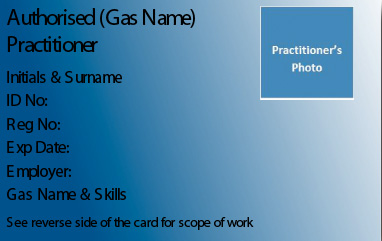
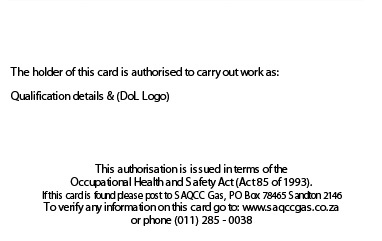
AUTHORISED PRACTITIONER DIGITAL CARD
Our Gas Practitioner license can now be viewed on the Electronic CoC App as a digital card. On the front of the card is the practitioner’s identity photograph, Personal details and the Department of Employment and labour logo. The reverse of the card includes a list of qualifications with the SAQCC Gas logo (watermarked both back and front).